Challenge
Questrade was redesigning its entire investing platform which provided an opportunity to improve the deposit experience. In addition to increasing successful deposits overall, the product team wanted to increase the number of deposits made using the Visa Debit method as this would reduce costs for the business.
Discovery
Data showed Visa Debit was lagging behind other deposit methods:
Online bill payment: 67%
Pre-authorized deposit: 10%
Interac e-Transfer: 9%
Visa Debit: 6%
Other: 8%
The operations team also reported issues with rejected or delayed deposits, primarily due to name-matching errors
Goals
Based on the discovery, we established these goals for the redesign:
Increase Visa Debit deposits
Increase overall successful deposits by improving error prevention throughout the flow
My Process
Content audit
I conducted a content audit of all the deposit flows and identified gaps that needed to be addressed in order to improve the deposit experience:
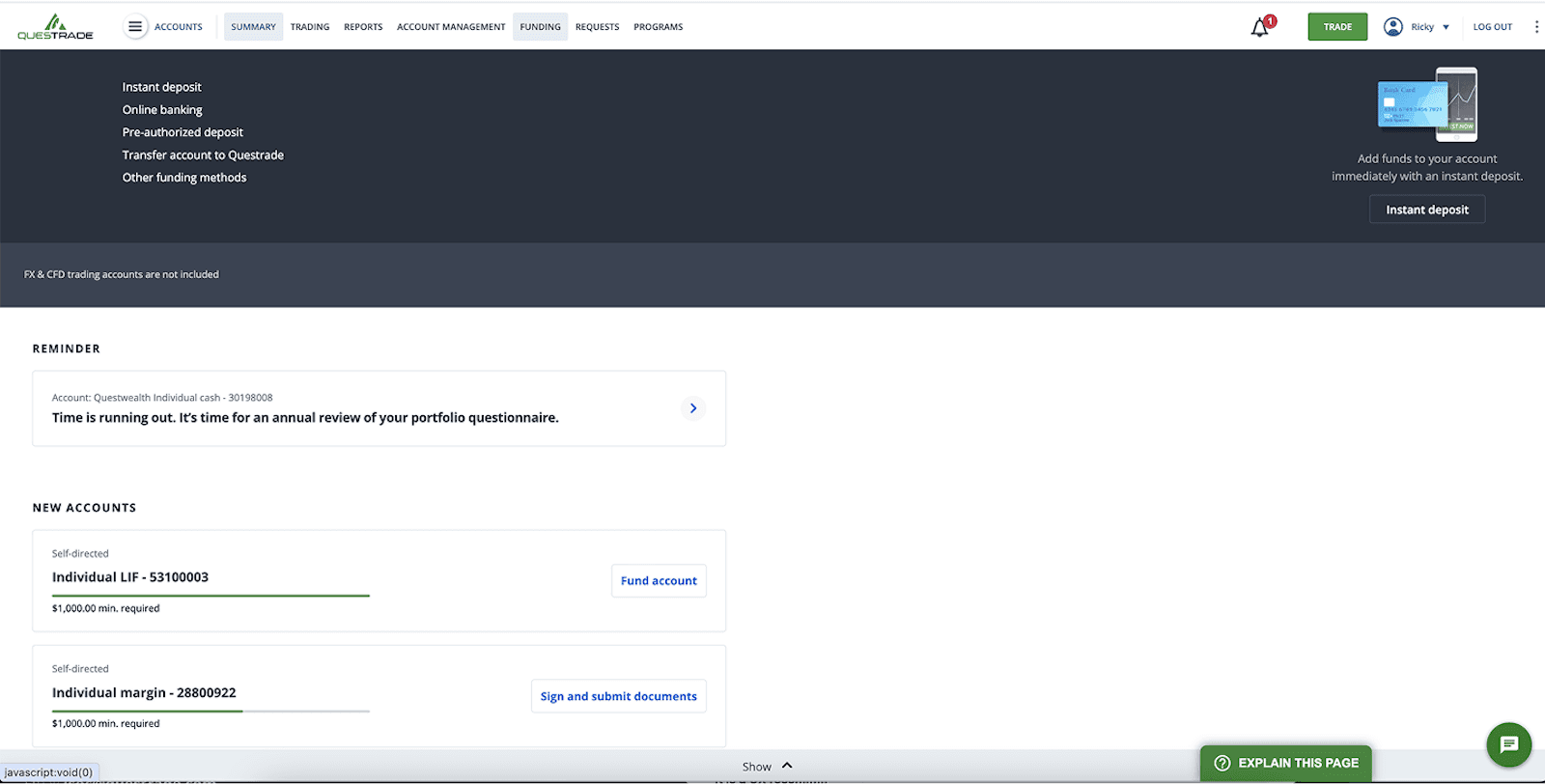
Deposit methods were displayed in a mega menu with no context
Customers didn’t have enough information about each deposit method to help them select the best option
Customers had to visit individual pages to learn more about each deposit method
Competitive analysis
I conducted competitor research to see how other financial institutions presented deposit methods and identified the most relevant details to include for customers to select a method:
Processing time
Deposit limits
Fees
Simplifying Instant Deposit
In the original flow, Visa Debit and e-Transfer were grouped together under “Instant Deposit.”
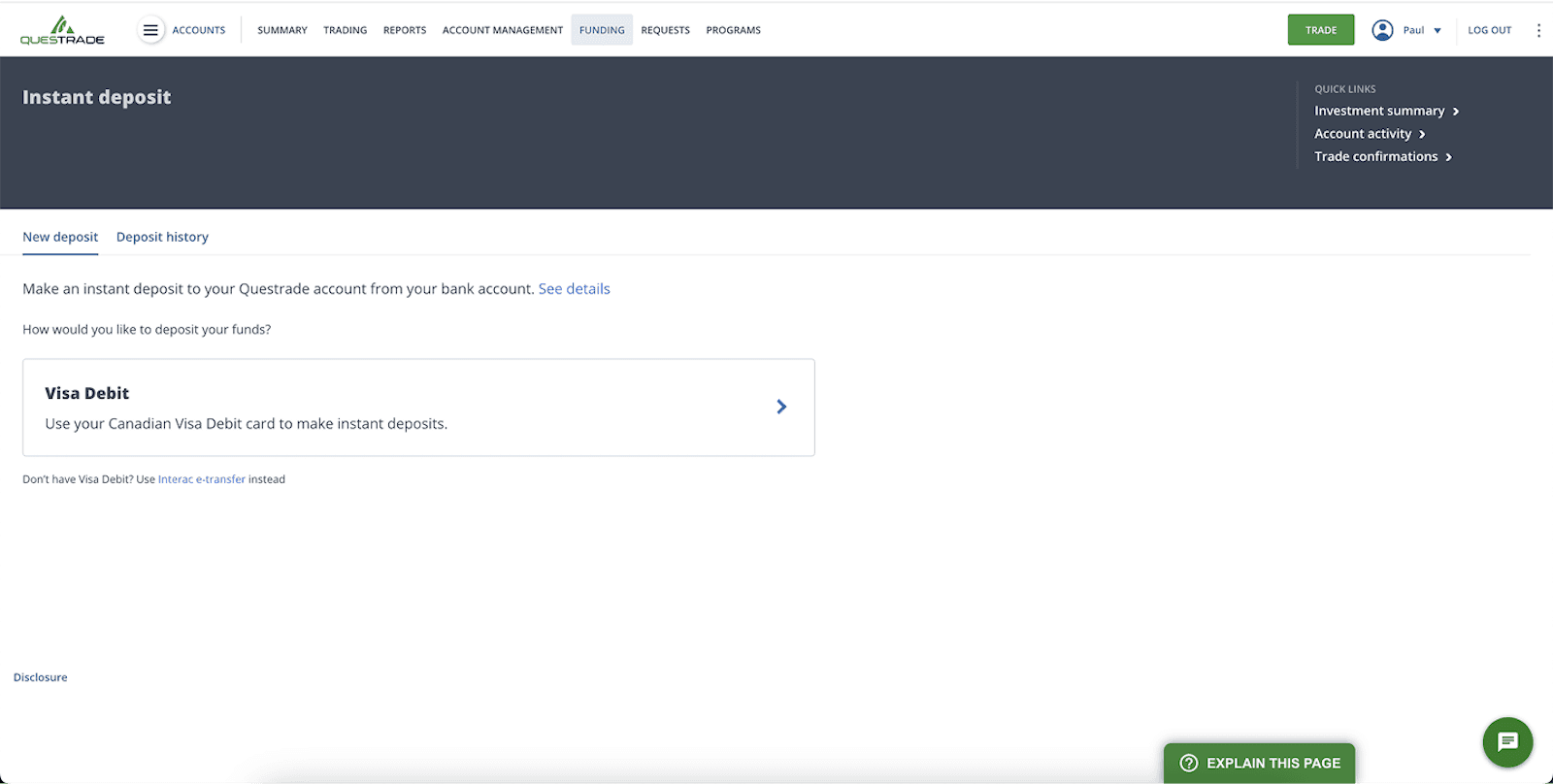
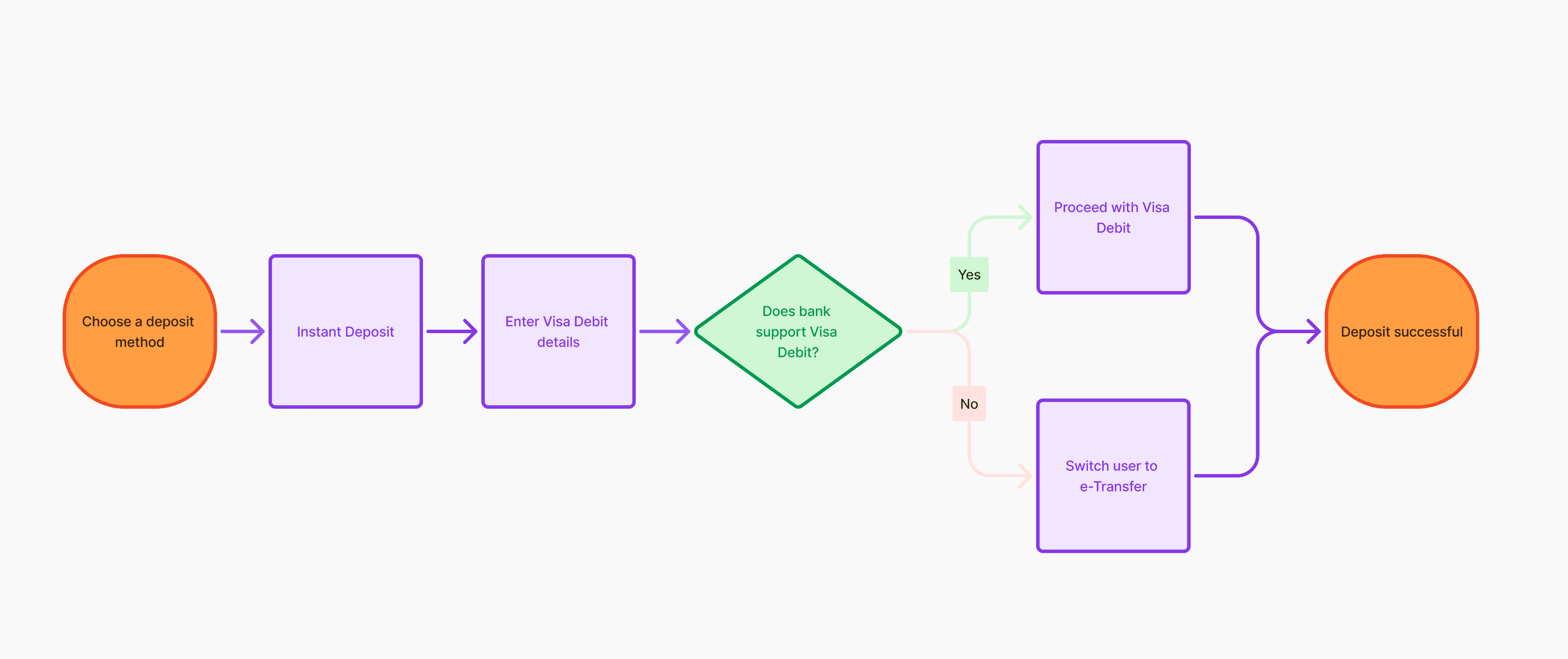
We explored keeping the Instant Deposit grouping as product preferred this approach. In our first design iteration, when a user selected Instant Deposit, they began the Visa Debit flow. If their bank didn’t support Visa Debit, they would be switched to e-Transfer.
I suggested splitting Visa Debit and e-Transfer into two separate options for clarity since the cards lacked space to clearly differentiate the two options. Instant deposit could be misleading because e-Transfer could take up to 30 minutes to process and sometimes the funds could be held for up to 10 days for verification purposes. Visa Debit and e-Transfer also had different deposit limits.
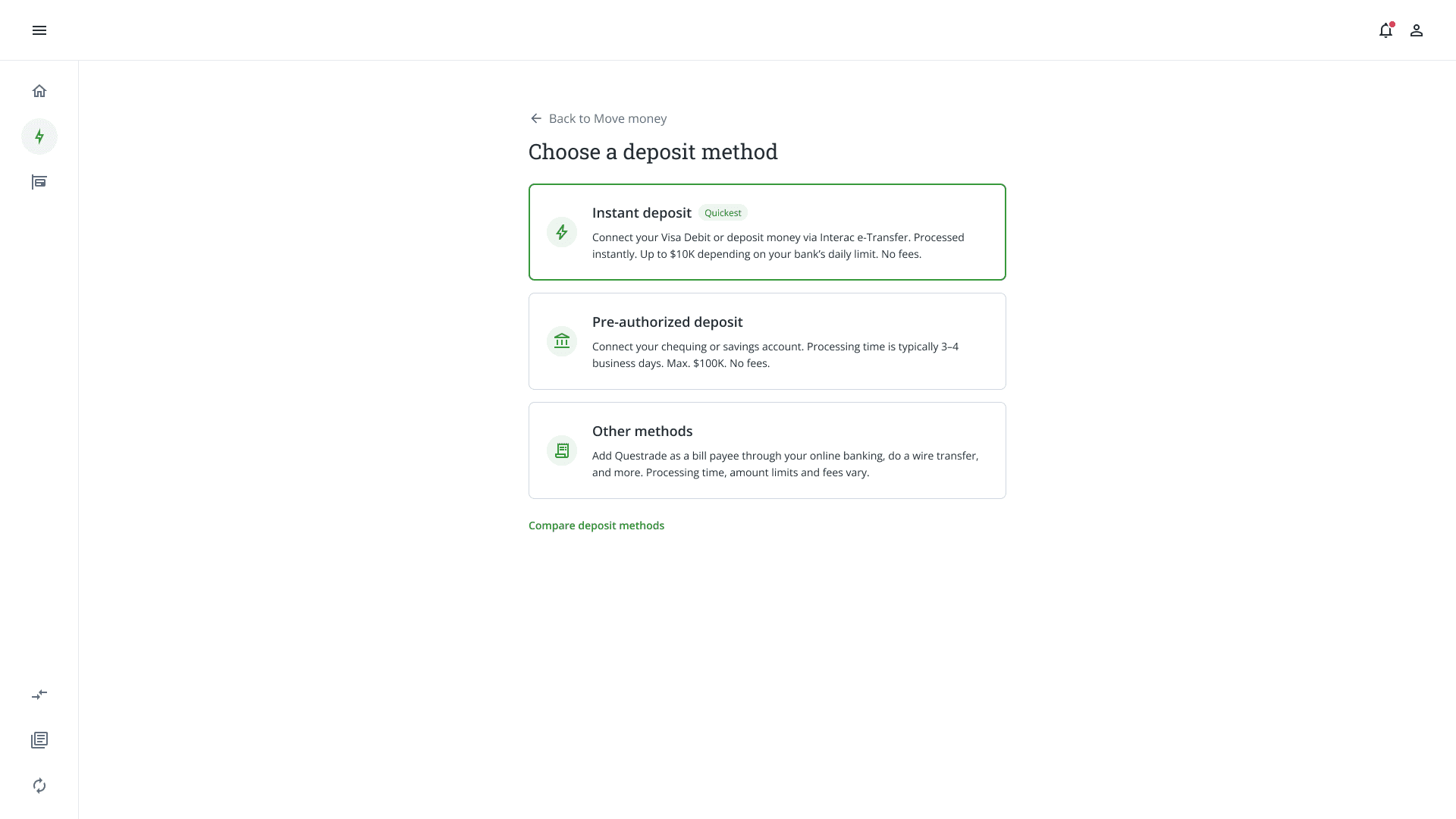
Product stakeholders expressed concern that splitting Instant Deposit into two methods would draw more attention to e-Transfer, further reducing Visa Debit deposits.
Usability testing
We partnered with UX researchers to conduct a moderated usability test with 10 participants (5 Questrade customers and 5 non-customers).
Key insights included:
8/10 participants said they would use Visa Debit if it meant faster processing times or higher deposit limits
5/10 participants were confused when the flow switched them from Visa Debit to e-Transfer
2/10 participants abandoned the flow entirely after the switch, opting for a different deposit method
Several participants said they expected to choose between the Visa Debit and e-Transfer rather than be switched automatically
One participant completed the entire Visa Debit flow thinking it was e-Transfer and commented:
“This looks like Questrade is using e-Transfer to go in and suck money from my account and this isn't normally how I do an e-Transfer. I would prefer to push it from my account.”
Based on these findings, it became clear that grouping Visa Debit and e-Transfer under Instant Deposit was creating confusion, reducing trust, and in some cases leading to drop-offs.
Reiterating with clarity
Based on the usability tests, I collaborated with UX and UI designers to create a new iteration:
Split Visa Debit and e-Transfer into two deposit methods
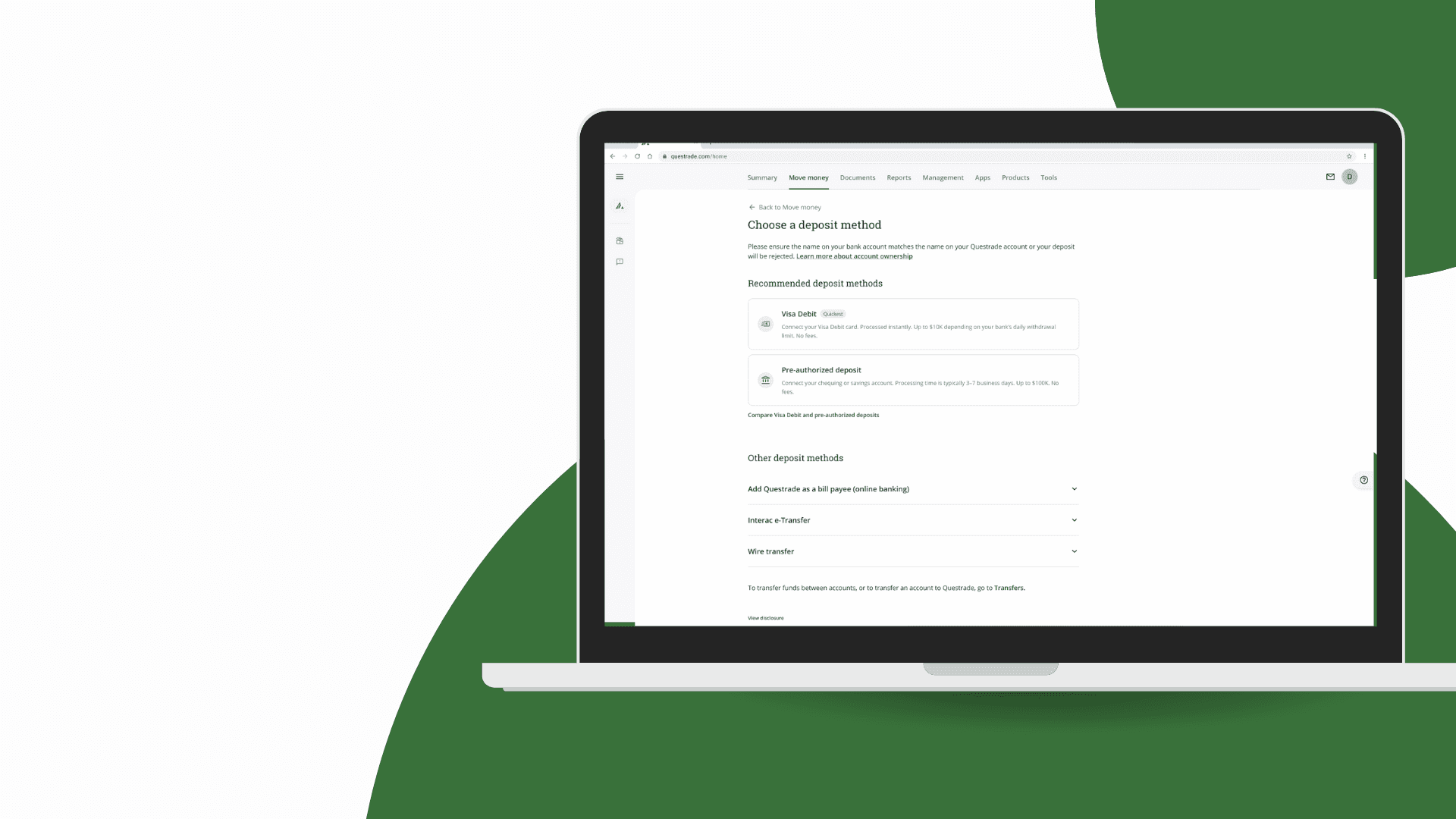
Placed Visa Debit first under a “Recommended deposit methods” heading
Added a chip highlighting Visa Debit as the fastest option
Moved e-Transfer under “Other deposit methods” in an accordion, reducing emphasis while keeping it available
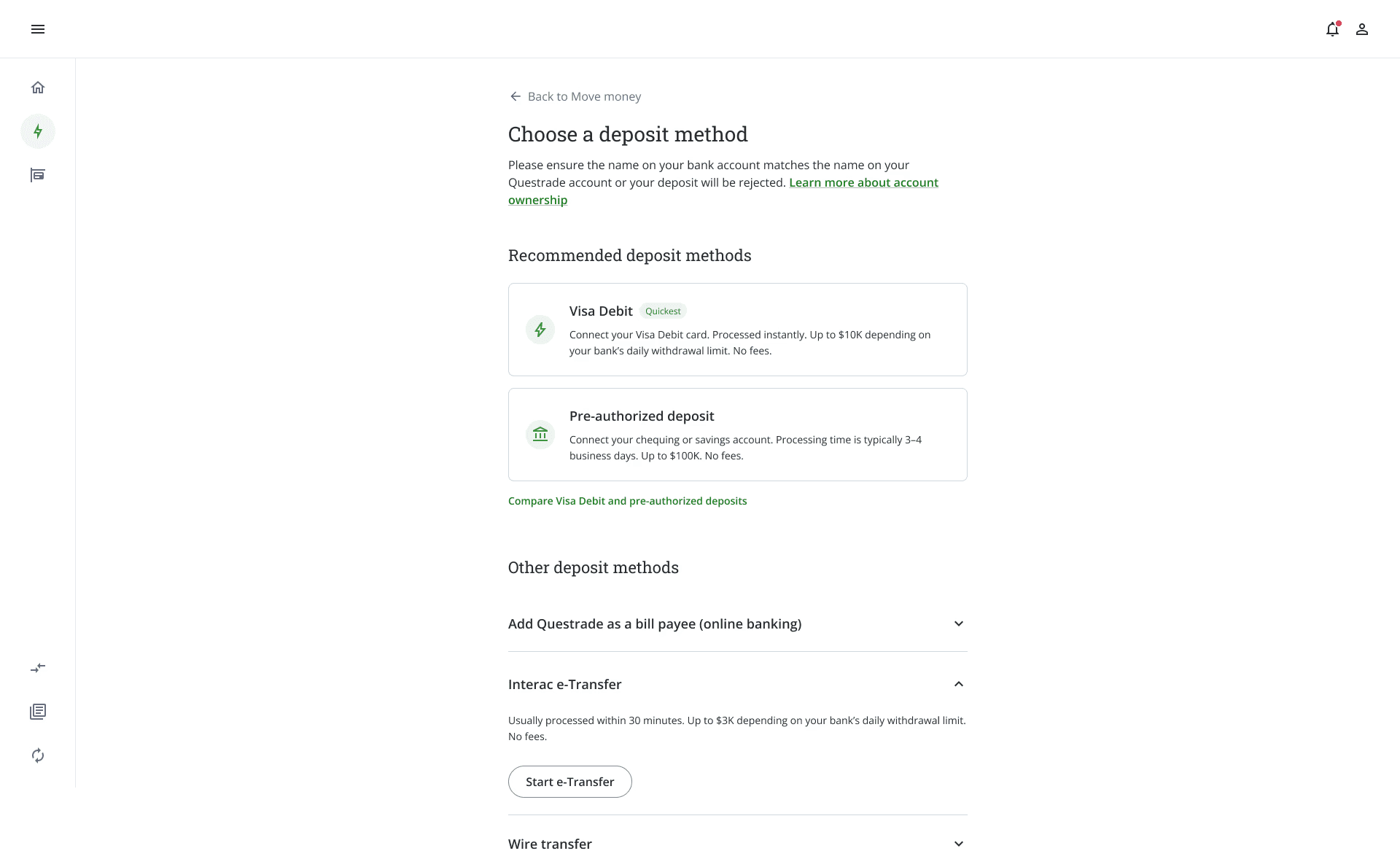
I incorporated key information about processing time, limits, and fees in the Choose a deposit page so customers could easily compare methods. Displaying each option in a card centralized the information, reducing clicks and making it easier for customers to choose the best method for their needs.
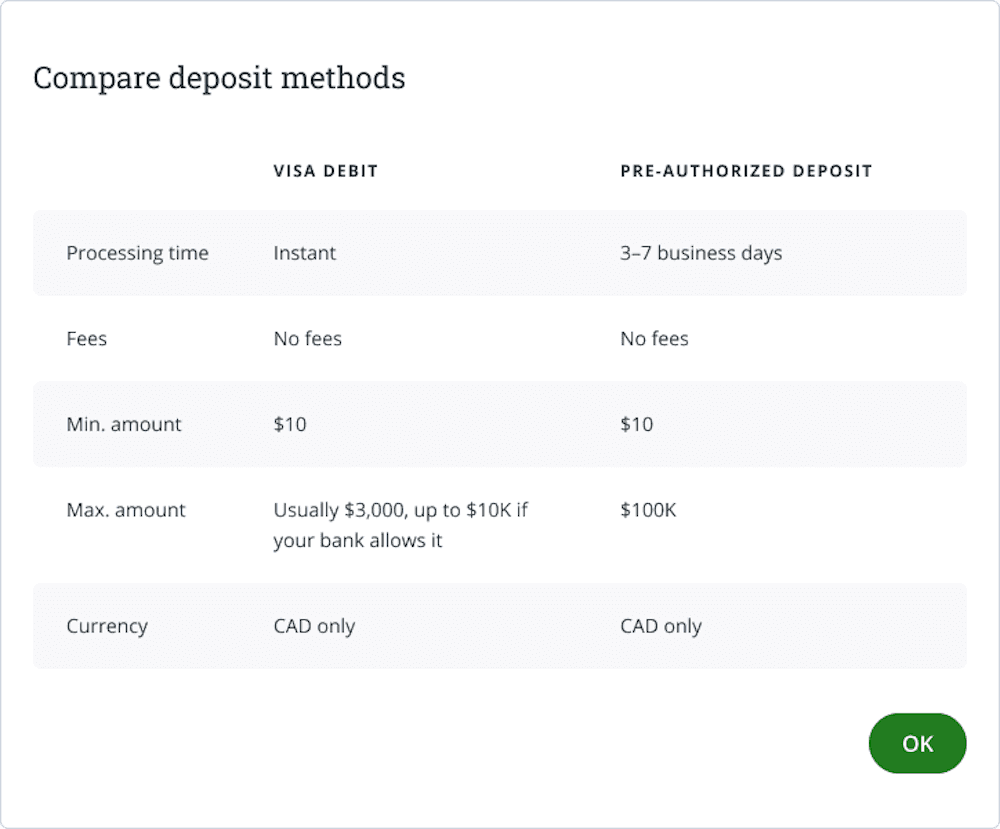
The redesign gave customers clarity and choice, while still supporting product’s goal of promoting Visa Debit.
Reducing rejected deposits
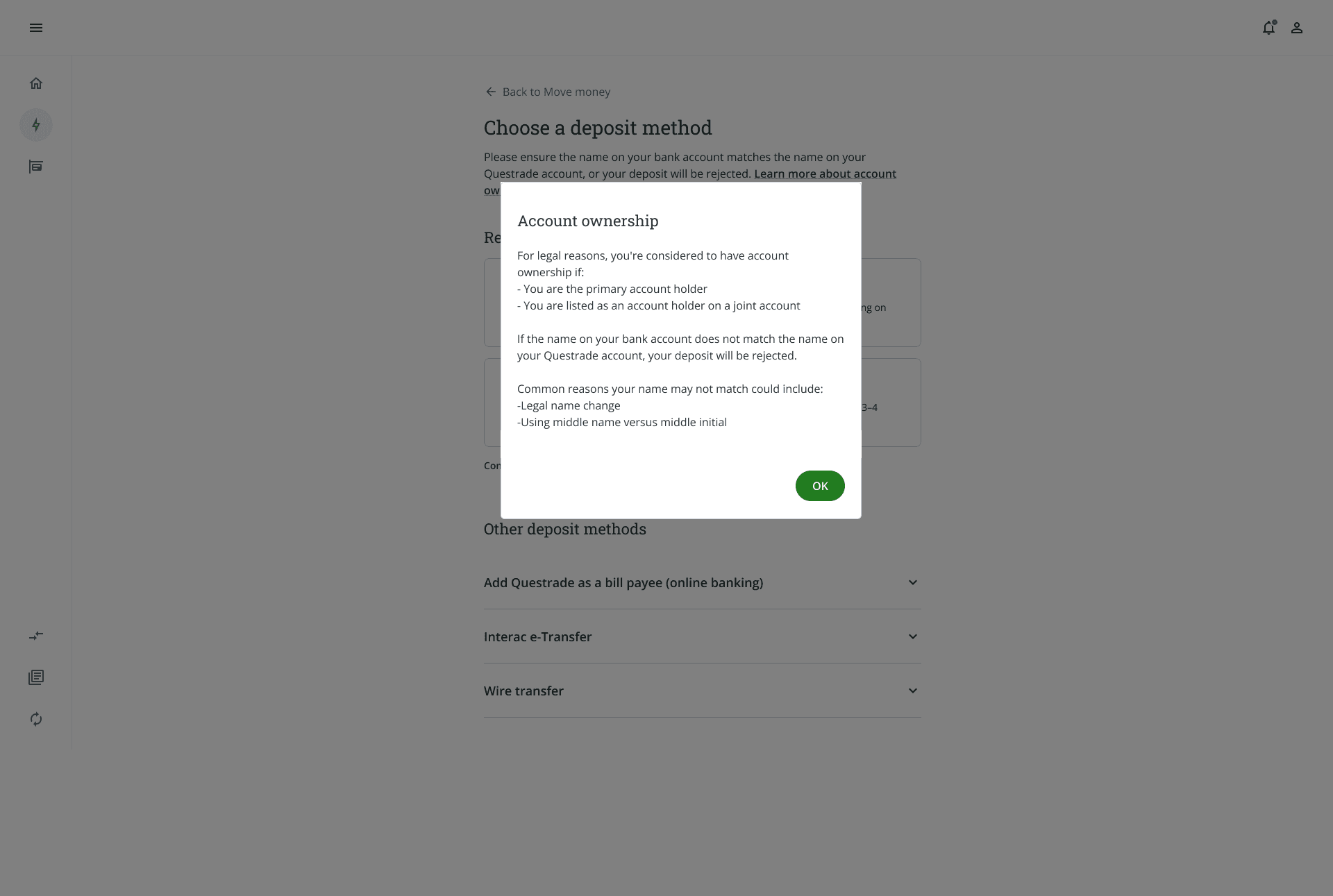
One of the most common reasons deposits were rejected was due to names not matching between the bank account and the Questrade account. To address this, I added an informational modal on the "Choose a deposit method" page which provided more information on what qualifies as account ownership and common reasons for names not matching.
I also tried to reduce errors by including warning messages throughout the flow if a user inputted an amount that exceeded the usual limits for that method.
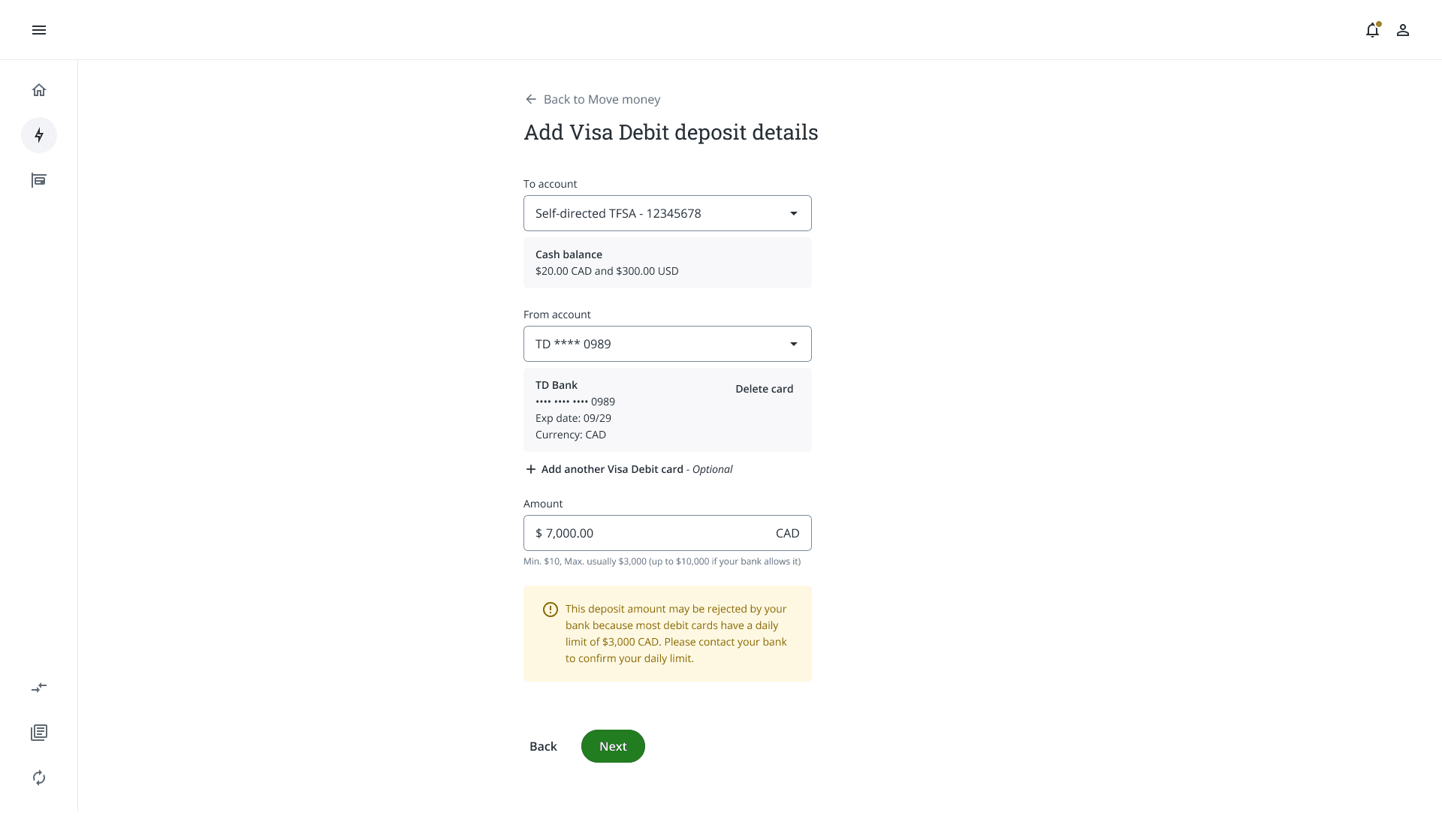
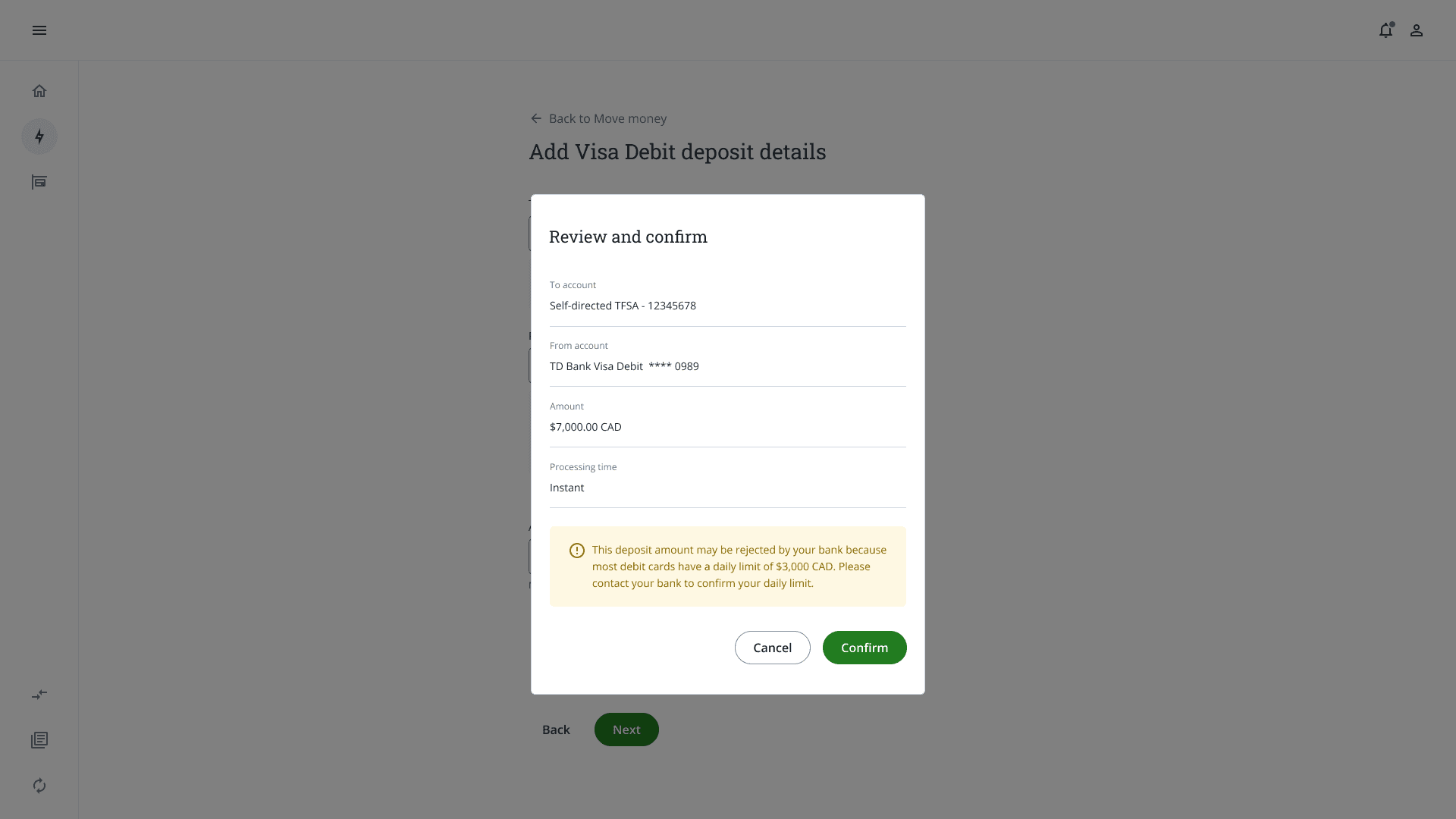
This proactive approach aimed to help users avoid a preventable error and increase the amount of successful deposits.
Outcome
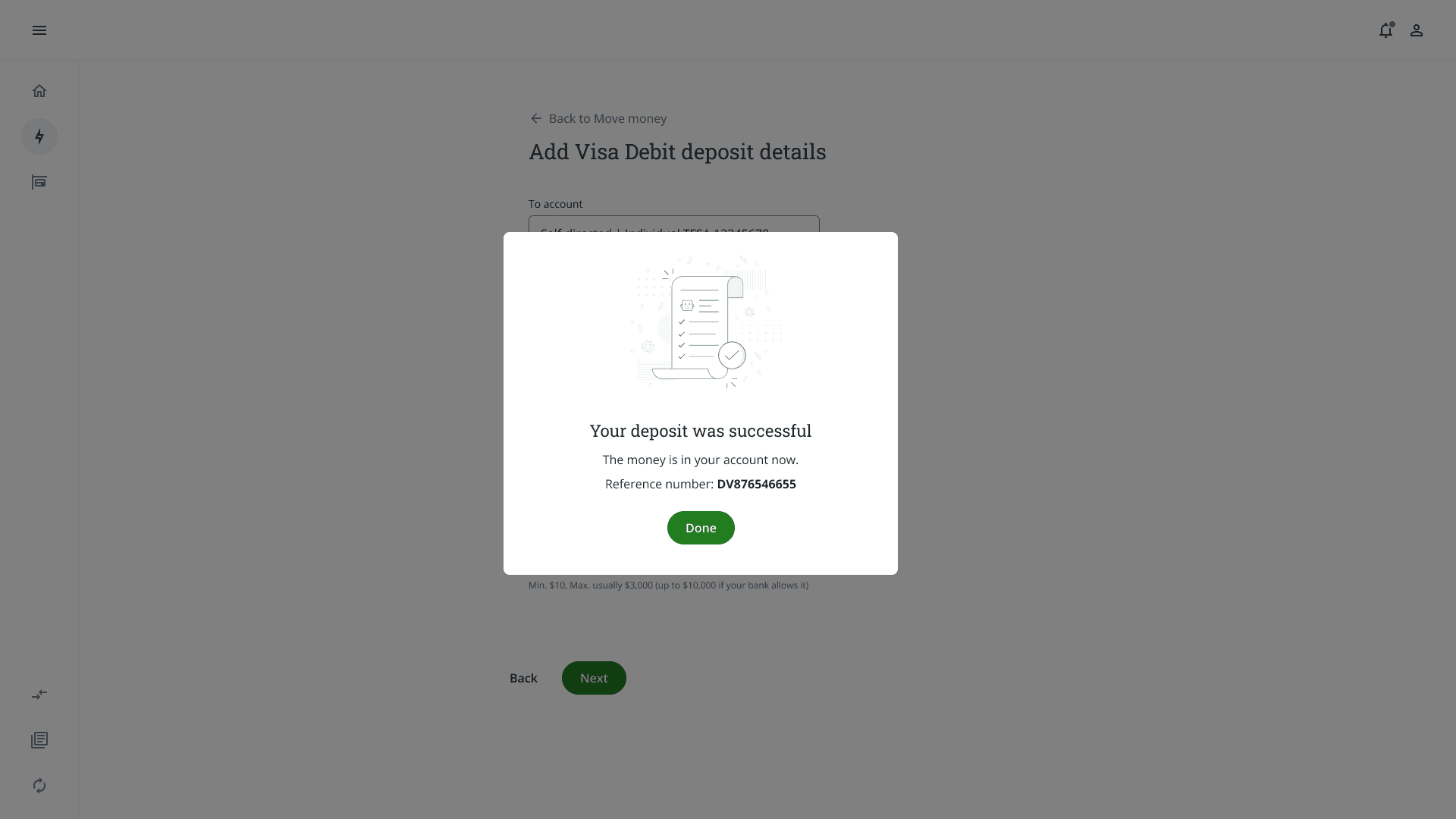
Deposits are a critical experience for Questrade customers. By improving clarity and promoting Visa Debit, we helped customers successfully fund their accounts and aligned the experience with business goals.
The redesigned deposit experience increased Visa Debit deposits by 67%, resulting in cost savings for the company. The overall amount of successful deposits also improved, with a 28% reduction in rejected deposits.
Learnings
Usability testing drives alignment: Usability testing provided evidence that helped the team agree on design decisions and align on the best approach
Transparency builds trust: Users value having clear information and the ability to make their own choices, especially when it comes to their finances
Strategic content matters: Thoughtful labels, grouping, and hierarchy guides user behaviour
In future projects, I'll continue to prioritize early usability testing and transparency, especially when it comes to financial experiences.